P3: Temporary Library
The first libraries were based on an Archive model, a safe place for important records. They housed mostly commercial transactions and inventories recorded on clay tablets. As the library developed, it retained this archival function, but on July 1, 1731, Benjamin Franklin and the Leather Apron Club of Philadelphia established the first public Circulating Library. Books were quite expensive at the time and by pooling resources, many volumes could be shared among contributing members. One was free to borrow any book for a length of time, return it, and borrow another. This new Library was built to expand and evolve, a shifting arrangement of ideas and objects constantly circulating in a concentrated community of committed readers.
From Zero to One (with David Reinfurt), Rob Giampietro
When thinking about connecting threads for the historical and contemporary experimental publishing projects gathered together on a library table, I have come to realize that I am interested in art and design inasmuch as they reflect certain individual and collective moments of engaging and developing strategies for reflecting the world or inventing worlds. In this, I guess I am mostly gathering examples of working, of structuring life and labor, in a way that seems not alienated, that vibrates with the effects of people living tenaciously, which extends circles of friendships and allies and connects to broader histories of thinking, making, and learning. The spaces that people create to gather are an essential part of these strategies. Often, artists' publications are archival documents of actual spaces or happenings that become temporary homes for a scene or emblematic of a certain hospitality to new forms of art and expression.
— Publishing As Practice: Introduction, David Senior
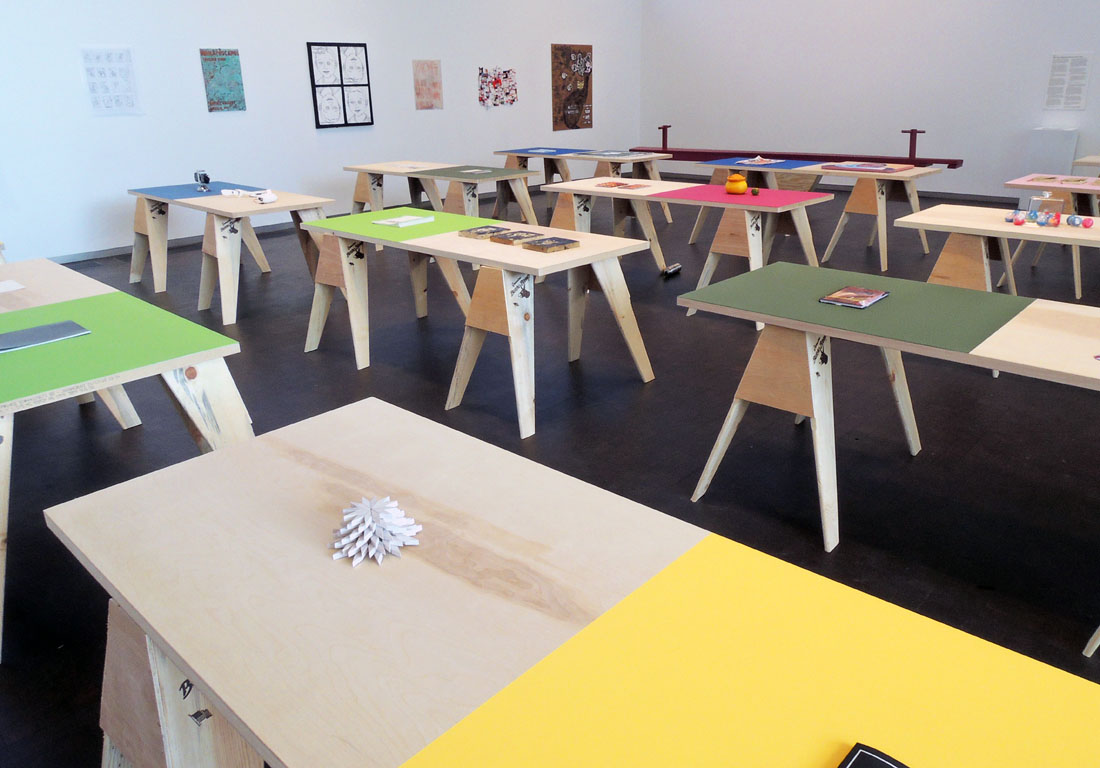
The book/poster show, hosted by students in the visual arts program at Princeton University.
The public library remains as one of the few social places that are freely accessible. While privatization, austerity, and the desire for profit have restructured social life around commercial exchange, libraries are one of the few locales that don't charge admission for entrance, and remain open to all. In the void left by the eradication of social services, libraries have srepped in, often providing basics such as wi-fi access, bathrooms, and childcare, for those with less resources. The library also has faced challenges from technology and the move to computer-based and online communication.
While a circulating library is beholden to scarcity, the infinitely replicable nature of digital information, calls into question the value of a brick and mortar space that trades paper bound books.
Despite these challenges, or perhaps in response to them, the library is a tenacious concept. One that requires us to call into question the push to privatize and profit from communities.
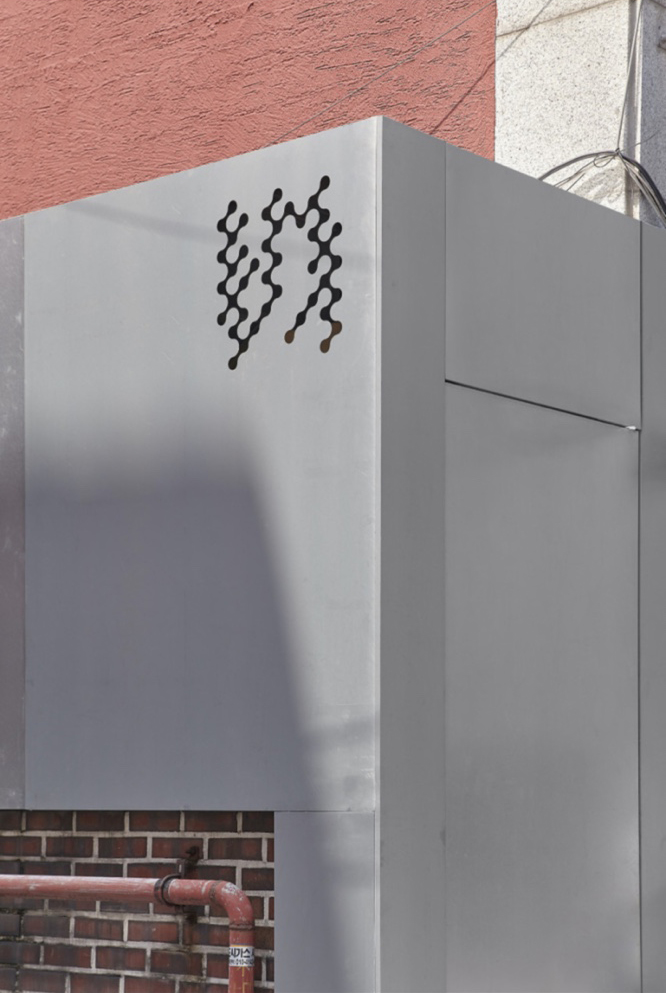
Exterior of WHITE NOISE
To engage with the broader community outside of SNU by sharing the outcomes of our research, we will create a temporary library to showcase our work and references. In the process we will reflect on publishing's nature for self-expression, community engagement, and how it can facilitate a group vision.

Logo for The Serving Library
In the design of our library we will consider how graphic design is both inherently inclusive and prohibitive. How does art and design discourse and education elevate the esoteric and gain relevance by being innacessible? And conversely how can design push boundaries through radical accessibility?
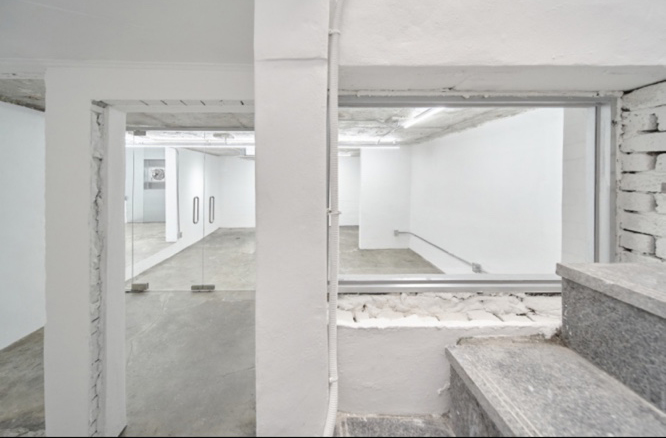
Interior of WHITE NOISE
Furthermore, consider how both our independence as a small group and class enables us to publish and act in ways larger institutions may not. At the same time, reflect on how our affiliation with Seoul National University impacts the perception of and adds weight to our library/show.
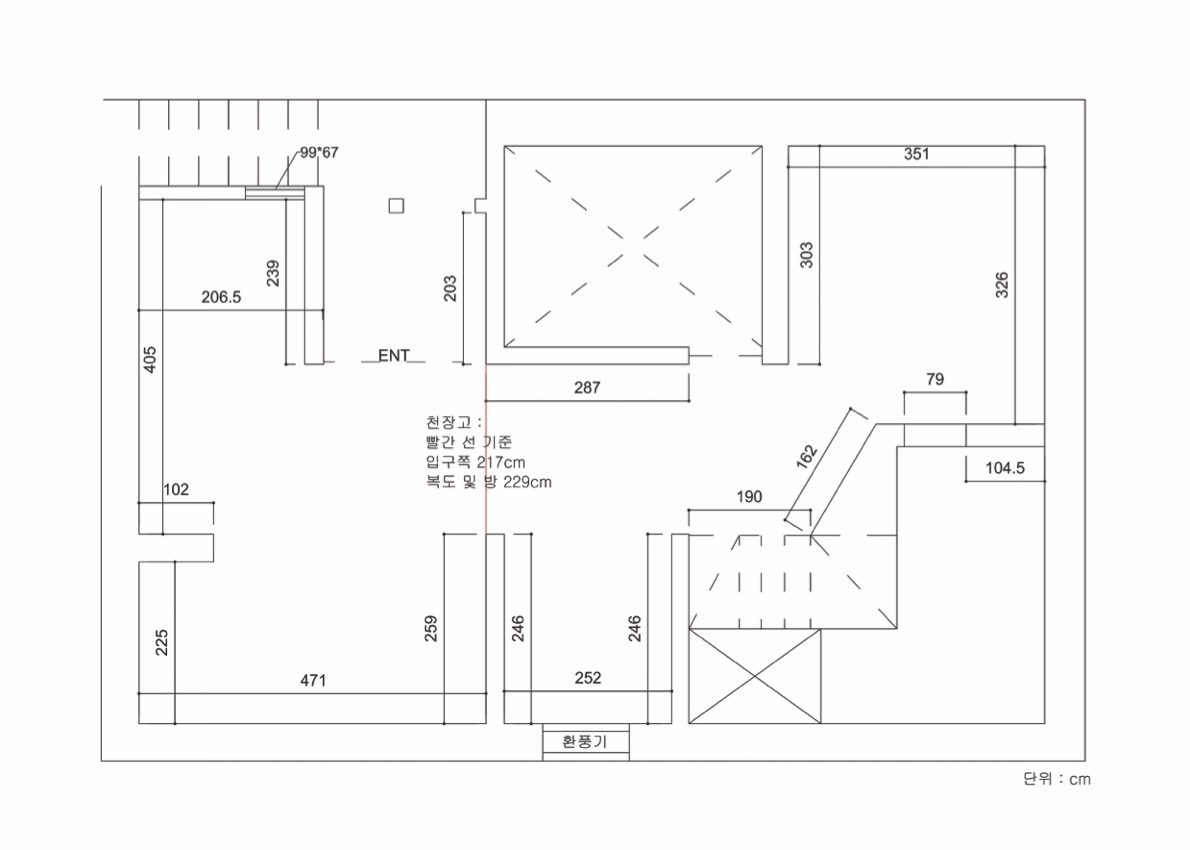
WHITE NOISE floorplan
At its core the library will serve as a exhibition space for your works. As such, how can we activate the area and engage with our community(ies) through programming such as talks, guided tours, and performance? What are the fundamental benefits of creating a temporal display of your works?

WHITE NOISE logo
The library will be composed of two sections:
- A collection of your artist publications
- A reading room of references related to your work and the class
We will all work together in a team to divide up tasks – with students seperating into the following teams: Project Management, Spatial Design, Identity Design, Catalog Design, Installation Team, Editorial Team and Communications Teams. In these teams we will address all aspects of an exhibition – from the design of the physical space, hanging hardware, furniture, and graphic signage, to the "exhibitionary apparatus" which includes promotion, events, and the footprint of the exhibition beyond the gallery. While it's inevitable that some jobs will be more time-consuming than others, it is very important we all chip in as equally as possible!
Finally, this library is meant to be a celebration of our time together! Let's work as a team and enjoy ourselves! 😄
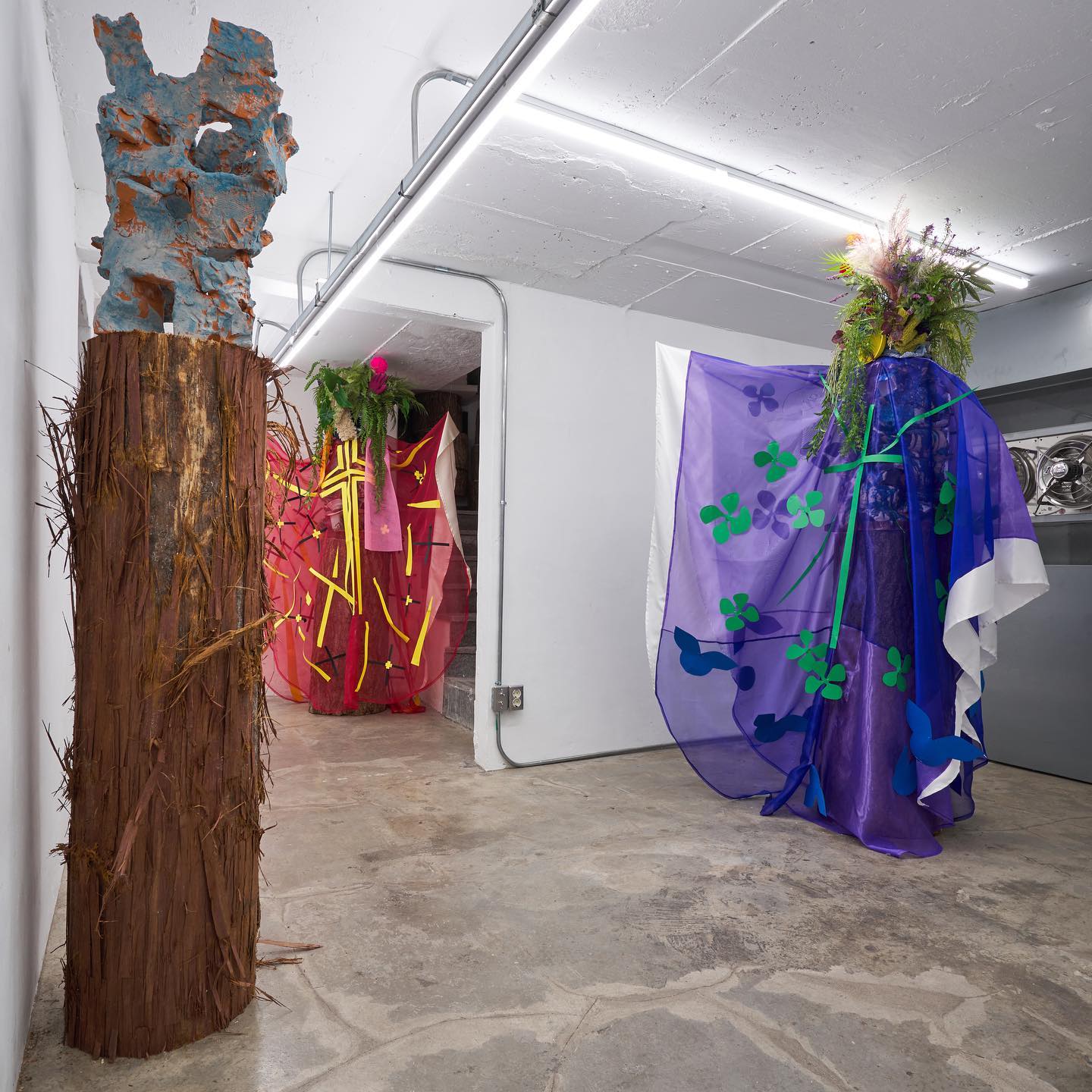
31st WHITE NOISE, Pangaea : Into the New World, WHITE NOISE, 2022
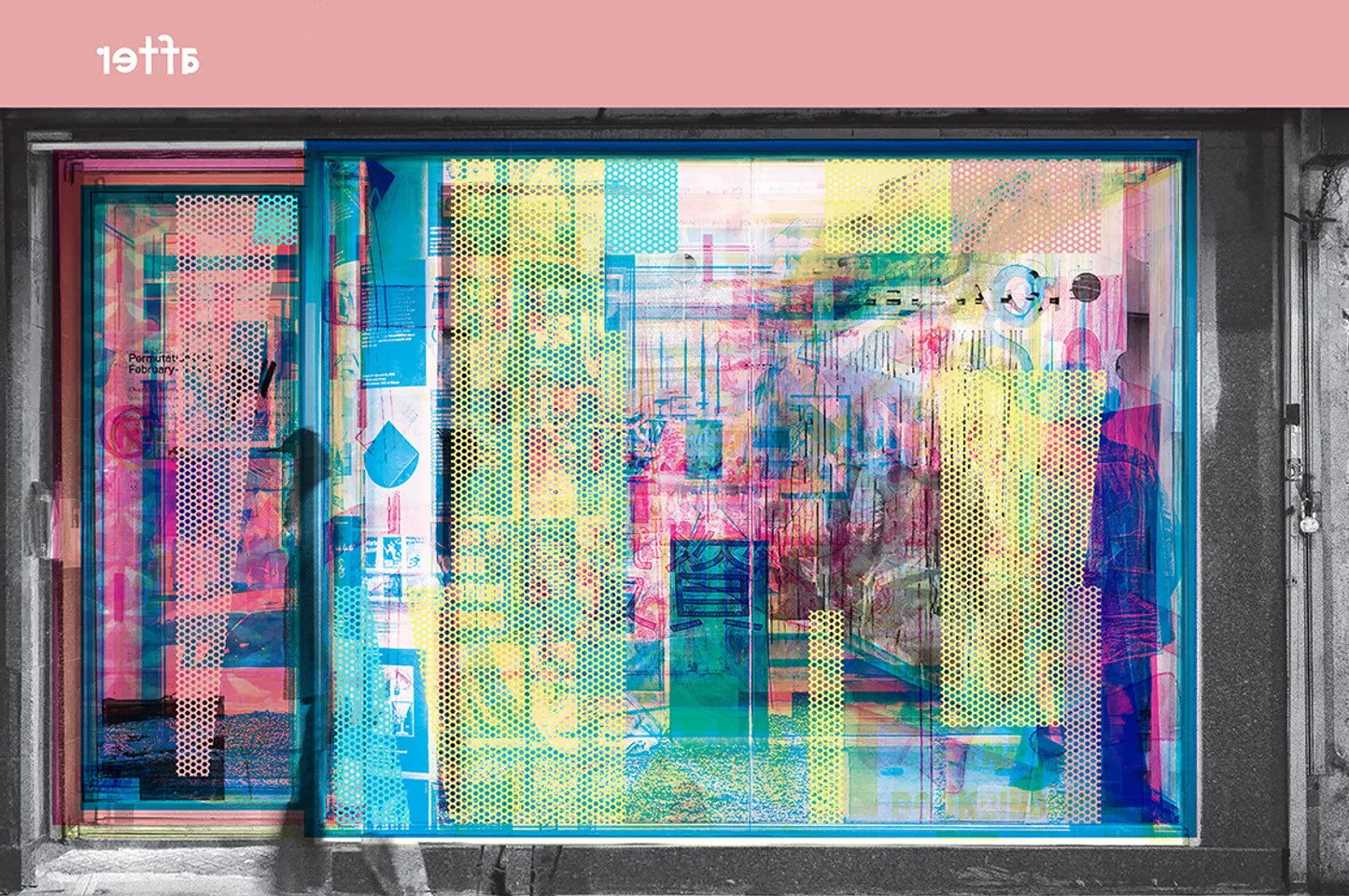
It's All True, Too, Céline Condorelli
Opening June 9
Topics: Library, Exhibition, Space
Learning Outcomes
- Designing space to create an engaging environment
- Considering how a project changes when it becomes a commodity and is in circulation
- Explore how a design meant for a multiple can be transformed into an exhibition format
- Conceptualize alternative forms of exchange and economies
- Practice working as a team
Requirements
- Outcomes from P1 and P2 from each student
- The selection of one additional publication for the reading room
- An installation featuring the class' work
Project Kickoff: Fri Apr 21
Share prompt
Step 1: Fri Apr 28
Select roles / teams
Step 2: Fri May 5
Brainstorm display concepts in your teams
Step 3: Fri May 12
First set of deliverables (sketches, rough drafts, etc.) for each group:
Project Management
share a schedule and plan for collecting works and install datesSpatial Design
sketch of floorplan and shelving/furnitureIdentity Design
"logo", type selection, online "poster" sketchesCatalog Design
proposal for catalog format (web, print, etc.) and sketchesInstallation Team
list of vendors for paint, vinyl, printing, furniture construction / rental, list of required materialsEditorial Team
rough draft of show statement that includes store concept and title proposals, and coordinating an event with After New OrderCommunications Team
proposal of show communication timeline + strategy
We will need to send out designs with an especially long production time at this point (ie. furniture).
Step 4: Due Fri May 19
Final proposal for all materials, and plan for install on Thursday December 15
Step 5: June 5
Install library at WHITE NOISE
서울시 서초구 방배로 42길 31-3 지하1층
B1, Bangbae-ro 42gil 31-3, Seocho-gu, Seoul
Opening Event: Fri June 9
Opening event TBD
Schedule
Week 8 - APR 21
Step 1 Due: Kickoff

Week 9 - APR 28
Step 1 Due: Role Selection

Week 10 - MAY 5
Step 2 Due: Brainstorm

Week 11 - MAY 12
Step 3 Due: Rough Sketches +

Week 12 - MAY 19
Step 4 Due: Final Designs + Install Plan

Week 13 - MAY 26
Send out time sensitive designs for production
Begin promoting show

Week 14 – Jun 5 → Jun 7
Step 5 Due: Installation

Week 15 - Jun 9
Step 6 Due: Opening event with After New Order 🎉
Reading
- From Zero to One (with David Reinfurt), by Rob Giampietro
- The Yale MFA Graphic Design Show, by Rachel Berger
- Graphic Design in the White Cube, by Peter Biľak
- The Exhibitionary Apparatus: The Exhibitionary Apparatus, by Andrew Blauvelt
- P!DF (excerpts), by Prem Krishnamurthy